
React
The library that powers Next.js. For interfaces that do a lot without reloading.
Part of our stack. We choose the right tools for each project, not the other way around.
React is the library we use to build interfaces that handle a lot at once: filtering, sorting, live updates, and dragging, all without the page reloading. We always use it via Next.js, the framework that handles the routing, rendering, and hosting around it.
What React is
A JavaScript library for building interfaces out of components. Every part—a button, a table, a form—is a reusable block that manages its own state. When the data changes, the screen updates automatically. Developed by Meta, used by most of the web.
What we use it for
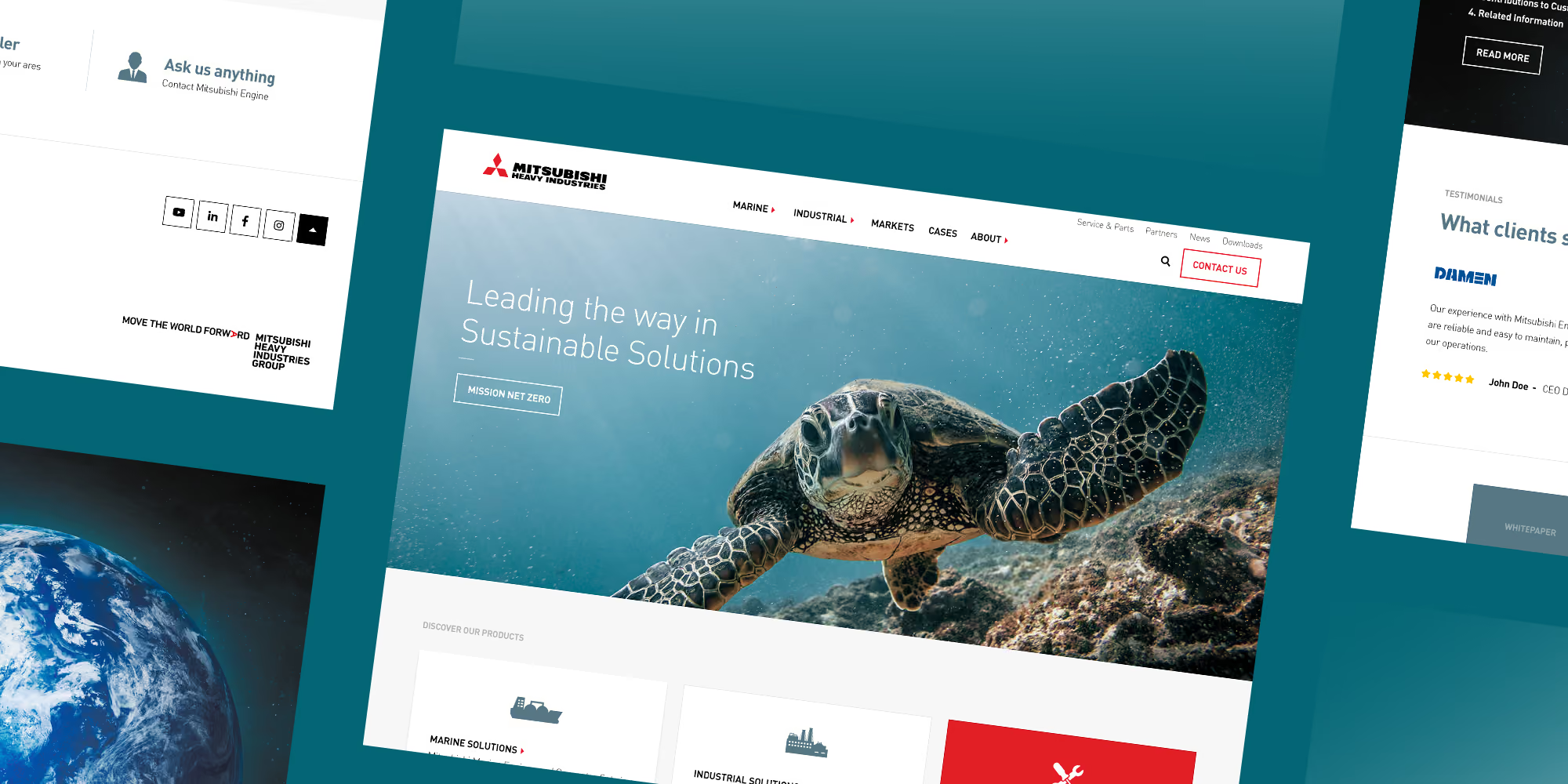
Comparison dashboards, product finders with extensive filters, configurators, tables with bulk editing, and admin environments where speed of interaction matters. The comparison dashboard for Mitsubishi, where engines are placed side-by-side, is a React interface.
How it fits into our stack
Via Next.js on Vercel. Data from Xano or Airtable. Sometimes as a standalone component on a Webflowpage, when one specific part requires more interaction than the rest of the site.
When not to use it
For a site that primarily displays content, React is overkill. Webflow with GSAP and Finsweet achieves the same result with less overhead.
How can we help?
Cases where we use these tools











Frequently asked questions
React of Vue of Svelte?
We werken in React omdat het ecosysteem het grootst is en omdat Next.js erop draait. Voor jou maakt het weinig uit; voor overdraagbaarheid is React de veiligste keuze.
Is een React-app snel?
Ja, mits goed gebouwd. Wij gebruiken React via Next.js, dat op de server rendert en alleen laadt wat een pagina nodig heeft.
Werkt een React-applicatie op mobiel?
Ja. Een React-applicatie is een website en werkt dus in de browser van elke telefoon. Voor een app in de App Store of Play Store is een ander traject nodig.
Kunnen we een React-component in Webflow zetten?
Ja, een React-component kan in een Webflow-pagina. Dat is handig als één onderdeel, bijvoorbeeld een calculator of configurator, meer moet doen dan de rest van de pagina.
Wie onderhoudt een React-applicatie?
Wij, of een developer van jou. Een React-applicatie van ons is standaard React-code, van jou en overdraagbaar.