Build a dealer portal
An environment for your sales channel: custom pricing, ordering, technical documentation, and materials per dealer.
Calling dealers about a price list you already sent last week, and having three versions of the same documentation circulating with no one knowing which one is correct.
Does this sound familiar?
Tell me what isn't working or what's taking up too much of your time, and I'll let you know what I would do and roughly what it would cost. You'll be speaking directly to me, not an account manager.

A dealer portal is a secure environment for your sales channel: dealers, distributors, agents, or resellers. They log in to see their own pricing, up-to-date documentation, and the materials they are authorized to use. This is one form of a portal, and usually the one with the highest return on investment, as many people often ask the same questions.
When you need this
Dealers call asking for a price list you already sent last week. Three versions of the same technical documentation are circulating, and no one knows which one is correct. Each dealer group has its own terms, currently stored in a spreadsheet. Orders arrive via email and have to be manually re-entered. Or perhaps you have dealers in multiple countries, requiring multiple languages.
What's included
Accounts per dealer or dealer group, with permissions that determine who sees what. Pricing and discount tiers per group, pulled from your ERP or price list. Product data with the correct specifications, filterable based on what matters in their market. Documentation and spec sheets, always the latest version, often automatically generated from your product data. Ordering or requests, with the order going directly into your own system. Plus, sales and campaign materials per region.
The tech stack
Interface in Webflow, login and permissions via Wized, data and API in Xano. Product data from Airtable or your ERP, connected via API. For screens with large amounts of data, we build in Next.js.
Our approach
We start with the questions dealers are asking right now, as that forms the core content of the portal. Usually, this involves documentation and pricing. We launch the first version with a small group of dealers. Ordering, campaign materials, and additional languages follow in later phases, based on what dealers actually use.
Standard package or custom solution
B2B ordering packages are great for ordering but weak in everything else: technical documentation, filtering by specifications, and region-specific materials. If ordering is all your dealers do, such a package might suffice. If it’s about product knowledge and the right documents, a custom solution fed by the same source as your website is a better fit.
Costs and timelines
That depends on the number of dealer groups, the integration with your ERP or price list, and the volume of product data. We typically build an initial working version in four to eight weeks, at a fixed price per phase.
Who it’s not for
If you have a few dealers with the same pricing, a shared folder or a marketing portal is enough. If you primarily sell to end customers, you need a webshop , not a portal. And if your product data isn't in order yet, start there: see PIM.
Where we’ve done it
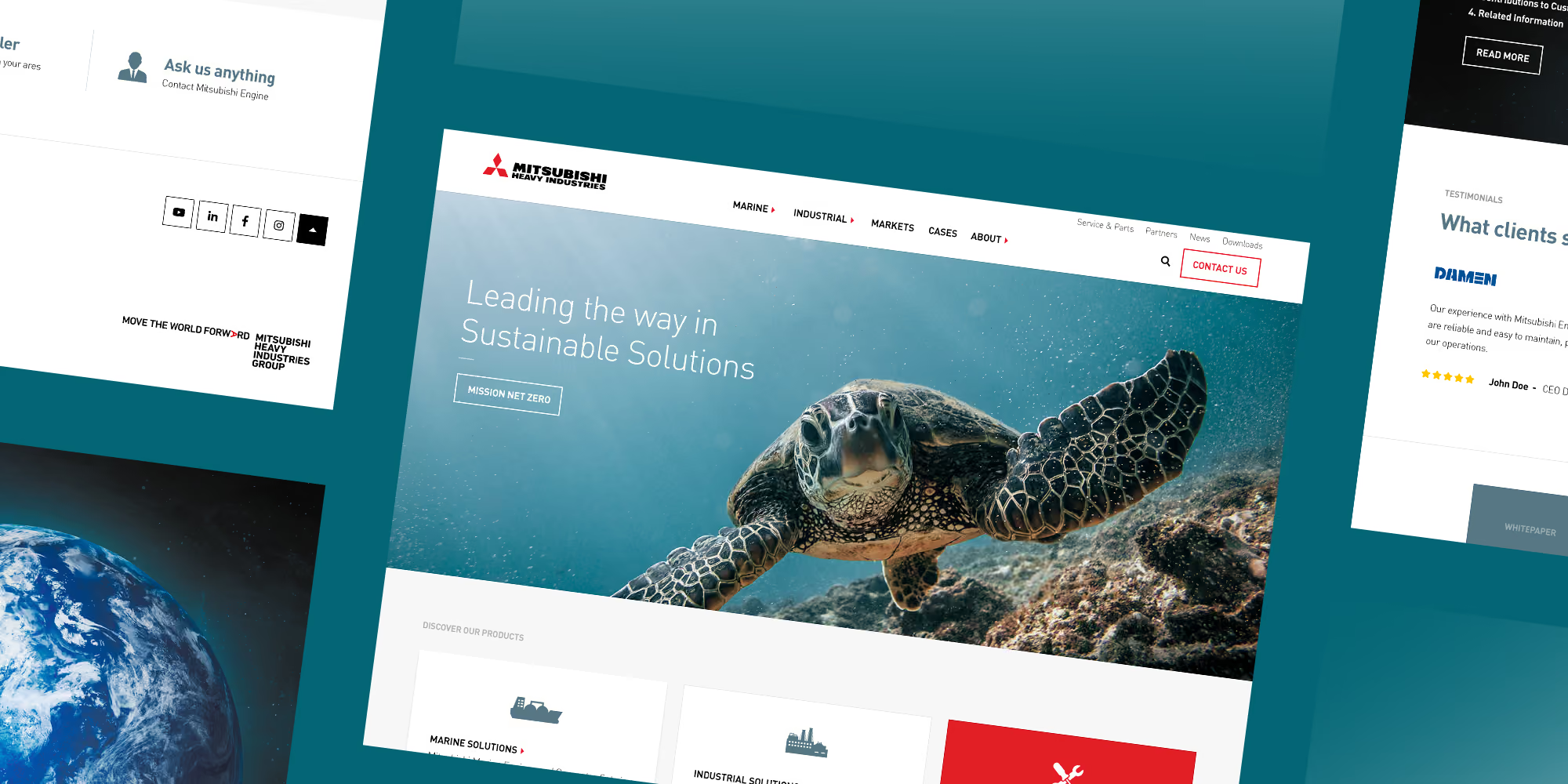
The dealer portal for Mitsubishi Turbochargers & Engines Europe is a prime example. Dealers across Europe search for engines based on the specifications relevant to their market and download the corresponding spec sheet. The data comes from the same source as the website, so dealers are always working with the latest version.
Read more
The source behind the portal: PIM and data management systems. The integration with your ERP: system integrations. If you want to know what the smallest version for your dealers looks like, email us the three questions they ask most often.
How can we help?
Cases
Projects



Get more out of your website
DeDigitaal Clients


























Questions about
Dealer portal
How much does it cost to build a dealer portal?
The cost of a dealer portal depends on the number of dealer groups, the integration with your ERP or price list, and the amount of product data. We usually build a first working version in four to eight weeks. We work with a fixed price per phase, so you know where you stand at each step.
Can a dealer portal show prices per dealer or dealer group?
Yes. Each dealer or dealer group sees their own prices, tiers, and terms in the dealer portal. These come from your ERP or from a price list you manage yourself. Permissions are checked on the server, so a dealer cannot retrieve another dealer's prices.
Can dealers place orders through the dealer portal?
Yes. Dealers order or submit a request in the dealer portal, and the order goes directly into your own system through the API. Nobody retypes orders from email anymore. If you want to show only documentation and prices first, ordering comes in a later phase.
Can a dealer portal be multilingual?
Yes. The dealer portal interface and the product data can be set up per language, so a dealer in every country works in their own language. The source stays in one place. See also multilingual websites.
Is a dealer portal secure enough for prices and terms?
Yes. A dealer portal uses encrypted connections and hashed passwords. Permissions per dealer are checked on the server, not in the browser. The data is stored in Xano within the EU, or stays in your own system if we connect to it.